Stellenbosch · Western Cape
Dornier Wines
Dornier Wines is a wine farm in Stellenbosch, Western Cape. About 39 km from Cape Town.
Stellenbosch · Western Cape
Dornier Wines is a wine farm in Stellenbosch, Western Cape. About 39 km from Cape Town.
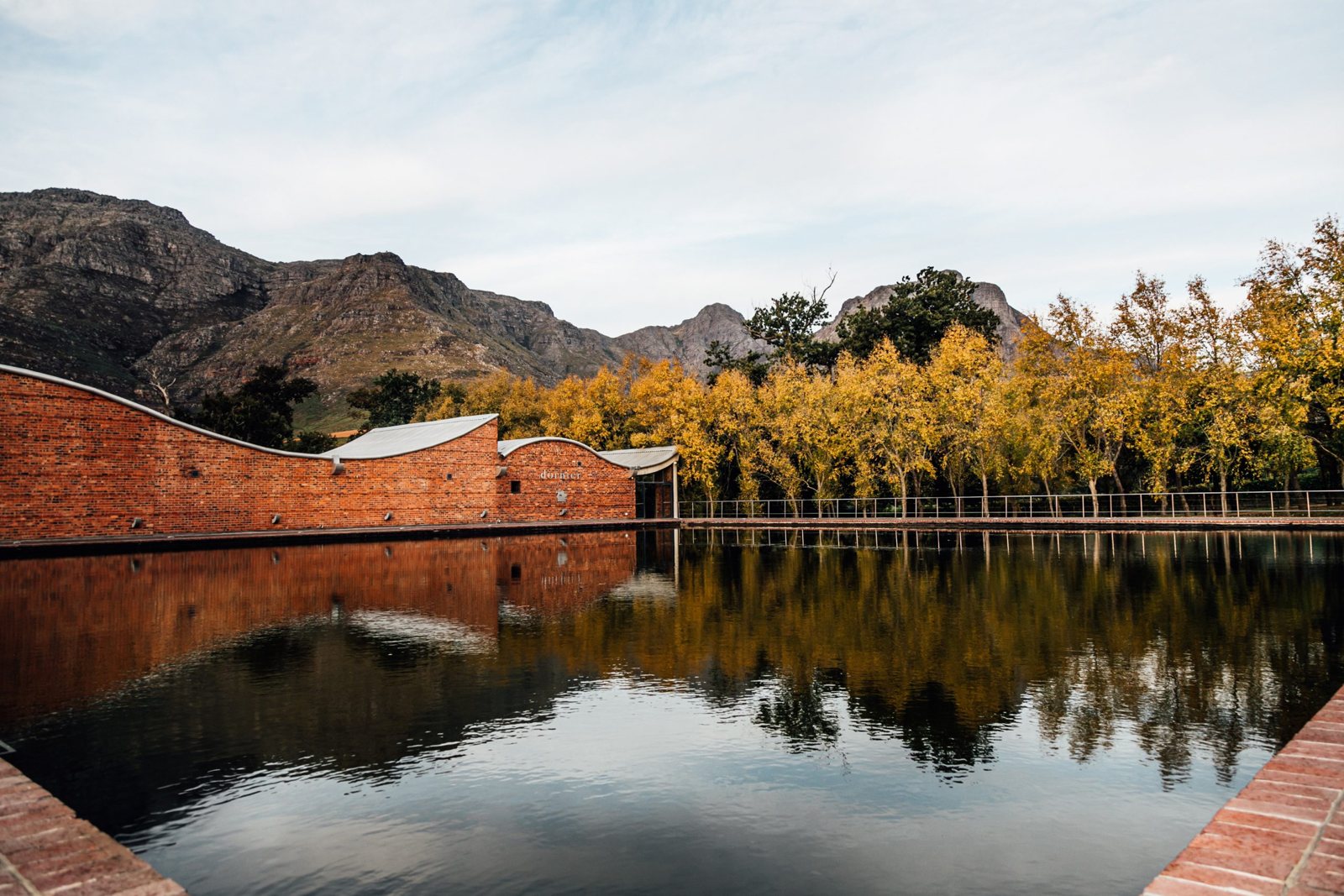
Dornier Wine Estate stands at the foot of Stellenbosch Mountain in the upper Blaauwklippen Valley—an architecture-forward Stellenbosch wine estate where striking modern cellar design meets ancient decomposed-granite terroir. Premium red and white wines expressive of the Helderberg / Stellenbosch “Golden Triangle” define the Dornier experience for travellers seeking design, history and serious bottles on one visit.
European agricultural use of the land dates to 1694, when Jan Jac Van Dyk founded holdings in the Blaauwklippen Valley. Centuries later, artist Christoph Modeste Dornier—son of aviation pioneer Claude Dornier—purchased the first of the farms that make up today’s estate in 1995, converting former fruit and cattle land to vineyards and fulfilling a vision of a landmark Stellenbosch wine property different from the rest.
The first Dornier wine was released in 2002. Christoph’s iconic modern cellar (around 500-ton capacity) at the foot of Stellenbosch Mountain remains a visual signature of the Helderberg–Stellenbosch wine landscape. In December 2020, Jan Rupert and Sons acquired Dornier, ushering in a new phase focused on premium quality and a world-class wine destination while honouring the estate’s past.
Dornier comprises land across farms including Groenkloof, Heldemeer and Stellenrust (Homestead)—the latter with a historic Sir Herbert Baker–designed homestead and one of Stellenbosch’s earliest wine cellars from the late 1600s.
Cool south-facing slopes and ancient decomposed red and yellow granite soils (including Tukulu and Oakleaf types) plus Table Mountain Sandstone components give vines good moisture retention and cool root zones. Vineyard altitudes roughly between 100 m and 200 m, diverse aspects, and cool Atlantic breezes trapped by high Stellenbosch Mountain peaks slow ripening and intensify flavour—classic Golden Triangle advantages for elegant, complex wines.
About 40 hectares of the roughly 180-hectare property are planted to noble varieties: Chenin Blanc, Cabernet Sauvignon, Merlot, Petit Verdot, Malbec, Cabernet Franc and Syrah.
Dornier focuses on premium reds and whites with minimal intervention, showcasing complexity and finesse rather than heavy-handed cellar marks. Expect Bordeaux- and Rhône-influenced assemblages and single-varietal expressions that speak of granite slopes and cool aspects. The Donatus wine club connects enthusiasts with ongoing releases and estate membership benefits.
Sustainability and ethics matter here: Dornier highlights strong IPW (Integrated Production of Wine) and WIETA ethical-trade ratings as part of its farming and employment story.
Visitors come for the interplay of historic Cape fabric and Christoph Dornier’s modern architectural cellar statement, paired with tastings of terroir-driven Stellenbosch wines. The upper Blaauwklippen Valley setting feels both dramatic and considered—ideal for design-conscious travellers and wine lovers exploring Helderberg / southern Stellenbosch routes. Confirm tasting hours, Donatus membership and any restaurant or event offerings via dornier.co.za before arrival.
Pair Dornier with nearby Helderberg and Stellenbosch Valley estates for a southern Stellenbosch day. Photography enthusiasts will appreciate the cellar and mountain backdrop—ask about any filming or commercial shoot policies. Book tastings when required and ask about Donatus club benefits if you plan to collect the wines after your Cape visit.
Dornier rewards visitors who care about architecture as much as aromas. Christoph Dornier’s modern cellar at the foot of Stellenbosch Mountain is a Helderberg landmark, while the estate’s older Sir Herbert Baker homestead narrative and late-1600s cellar roots remind guests that this upper Blaauwklippen Valley site layers centuries of Cape history beneath contemporary design.
Ancient decomposed granite soils, cool south-facing slopes and Atlantic-influenced breezes underpin elegant Chenin, Cabernet-family reds and Syrah. Minimal-intervention winemaking and strong IPW and WIETA ratings appeal to travellers who want premium Stellenbosch bottles with clear sustainability and ethical-trade context.
Since the 2020 Rupert family acquisition, Dornier continues evolving as a premium wine destination—worth confirming current tasting and hospitality offerings before arrival. Combine with nearby Helderberg estates for a design-and-red-wine day, and ask about Donatus club membership if you plan to collect after leaving the Stellenbosch wine route.
Position Dornier as the architecture-and-terroir stop on a southern Stellenbosch loop. After tasting granite-driven Chenin or Cabernet-family wines at the modern cellar, you can continue toward other Helderberg estates or circle back into Stellenbosch Valley addresses. The contrast between Christoph Dornier’s contemporary cellar statement and the historic Baker homestead narrative is itself a reason to visit.
Ask about soil and aspect differences across Groenkloof, Heldemeer and Stellenrust parcels—the estate’s strength is matching noble cultivars to diverse granite and sandstone sites between about 100 m and 200 m. That conversation helps visitors understand Golden Triangle elegance versus warmer, riper Helderberg styles tasted elsewhere the same day.
Donatus membership suits travellers who want ongoing access after returning home. Confirm ethical-trade and IPW talking points if sustainability is part of your winery selection criteria, and verify current visitor hours on dornier.co.za because hospitality offerings can evolve under ongoing premium-destination development.
Tutored tasting in Wine Lounge with Stellenbosch Mountain views; no children under 13.
Price From ~R60 for 6 wines (confirm on arrival) Duration Tutored tasting
Booking: Dineplan or winelounge@dornier.co.za / +27 21 880 0557; Daily ~09:00-17:30
Details on the farm website ↗German-style flammkuchen and bagels made on site to pair with wines.
Price Flammkuchen R90-R150; bagels R70-R120 Duration Meal with tasting
Booking: With Wine Lounge visit / Dineplan
Details on the farm website ↗Curated cheese, charcuterie, or combined boards with accompaniments.
Price Charcuterie R230; Cheese R265; Combined R315 Duration Sharing experience
Booking: Wine Lounge / Dineplan
Details on the farm website ↗Guided tour of Dornier modern cellar near tasting facility.
Price Enquire
Booking: Essential advance booking
Details on the farm website ↗Wine list from wine.co.za. The taste words are drawn from those notes, which are not reprinted here. Ask the cellar door what is pouring on the day.
Dornier Wines is at Dornier Wines, Blaauwklippen Road, Stellenbosch, 7600. Most visitors drive there from Cape Town in 45–60 minutes.
Open Sunday · 09:00-17:30. Hours change, so call +27 21 880 0557 before you drive.
From R60. Prices change, so confirm when you book.
The wine route lists Dornier Wines as open on Sundays. Sunday hours are often shorter, so call +27 21 880 0557 first.
Geographical unit: Western Cape → Coastal Region → Stellenbosch
Stellenbosch is the flagship Wine of Origin district of the Cape: granite mountains, university town, and the densest cluster of visitor-ready wine farms in the country.
Elevation and soil figures are modelled at the pin, not a vineyard block survey. Use them to compare farms, not to quote a technical sheet.
Stellenbosch
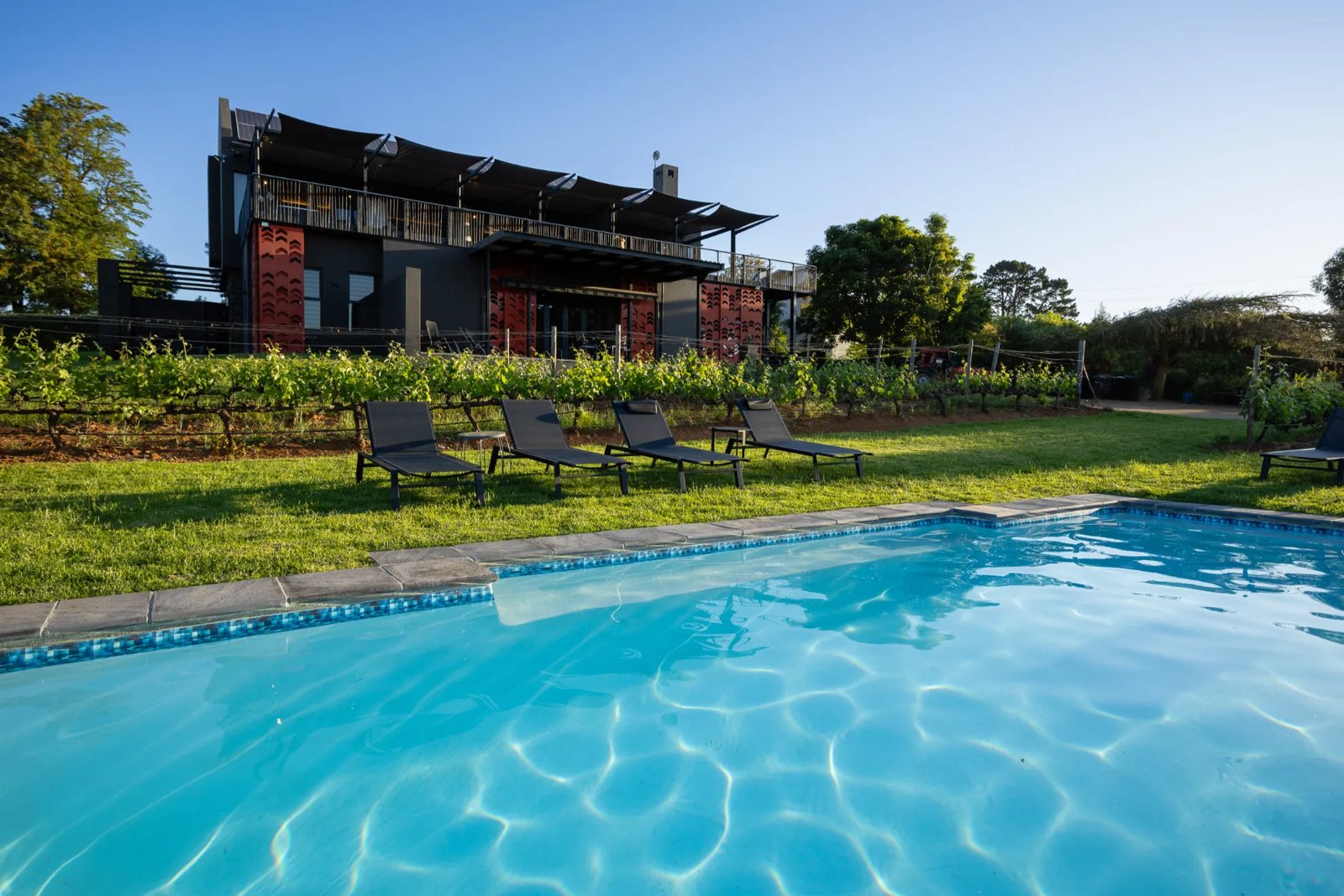
Kunjani Wines (also styled Kunjani Villas & Wines) is a boutique Stellenbosch wine estate in the Bottelary Hills near Devonvale, founded by Paul Barth and Pia Watermeyer.
Romantic Tasting Stay
Stellenbosch
Stellenbosch
KidsViewsWheelchair access Tasting Restaurant Stay
Stellenbosch
Stellenbosch
Tasting
Stellenbosch

Stellenbosch
Stellenbosch
KidsRomanticWheelchair access Tasting Restaurant Stay
Stellenbosch
Stellenbosch
Stellenbosch
Stellenbosch
Stellenbosch
Stellenbosch
KidsWheelchair access Tasting Restaurant