Stellenbosch · Western Cape
Fleur du Cap
Fleur du Cap is a wine farm in Stellenbosch, Western Cape. About 39 km from Cape Town.
Stellenbosch · Western Cape
Fleur du Cap is a wine farm in Stellenbosch, Western Cape. About 39 km from Cape Town.
Fleur du Cap is one of South Africa’s best-known wine brands, historically inseparable from Die Bergkelder — the underground “cellar in the mountain” cut into Papegaaiberg on the outskirts of Stellenbosch. Launched around 1968, shortly after Bergkelder opened, the label carried a generation of Cape drinkers into noble varieties, French oak maturation and accessible premium bottles. Today Fleur du Cap remains a retail and online presence; it is not a classic walk-in Wine Route farm with published tasting-room hours.
For travellers mapping Stellenbosch, treat Fleur du Cap as brand and heritage context tied to Papegaaiberg and Distell-era infrastructure, then buy bottles through legitimate retail or the brand’s age-gated e-commerce channels. Do not plan a day around a Bergkelder or Fleur du Cap cellar-door visit until you independently confirm that a public venue has reopened.
Die Bergkelder was founded in 1967 (opened 1968) under the Stellenbosch Farmers Winery / Distillers orbit associated with Dr Anton Rupert. It was promoted as the first underground bottle-maturation cellar of its kind in the Southern Hemisphere: cool rock galleries for bottle ageing, large carved French oak casks, and a visitor narrative that made industrial winemaking feel like destination tourism minutes from Stellenbosch town.
Through the 1970s, Bergkelder teams encouraged growers to plant classic cultivars — Chardonnay, Sauvignon Blanc, Cabernet Sauvignon, Cabernet Franc, Merlot and others — when much of the Cape still leaned toward bulk-oriented plantings. In 1979 the cellar helped popularise maturation of quality wine in small new French oak casks. Cellarmaster Dr Julius Laszlo (late 1970s–early 1990s era) became synonymous with lifting Cape fine wine into international conversation; a later signature blend named in his honour (Laszlo) keeps that memory on the label.
Fleur du Cap was the consumer-facing flower of that mountain-cellar project: stylish wines “inspired by nature,” built from selected Coastal Region vineyard blocks rather than a single smallholding. Historical brand materials describe fruit from Stellenbosch foothills (including Bottelary slopes) and wider Cape Coastal sites, matured in controlled underground conditions.
Portfolio architecture has long included approachable varietal wines alongside more ambitious lines:
The house style aims for contemporary varietal clarity and layered fruit rather than rustic estate funk. Recent competition chatter (for example Platter’s recognition of an Unfiltered Merlot in coverage toward the mid-2020s) shows the brand still competes at serious tasting tables even as tourism access has changed.
Fleur du Cap sat for decades in the Distell group after Stellenbosch Farmers Winery merged with Distillers Corporation in December 2000. Distell’s Stellenbosch headquarters and Papegaaiberg facilities made the brand part of South Africa’s largest wine-and-spirits ecosystem. In 2023, Distell’s wine and spirits businesses moved into the Heineken Beverages South Africa structure — another ownership chapter for labels and sites historically tied to Bergkelder and Fleur du Cap.
That corporate scale explains both the brand’s shelf ubiquity and why it behaves differently from boutique Stellenbosch farms: grape sourcing, maturation logistics and marketing sit inside group infrastructure, not a family tasting room under oaks.
Official site: fleurducap.co.za currently functions as an age-gated online shop for premium wines and spirits delivery — not a booking page for farm tastings.
Die Bergkelder Wine Centre historically offered Fleur du Cap–focused tastings, cellar tours, a large retail shop, museum displays and even a salt-and-wine pairing experience. Multiple recent travel sources report the public visitor operation permanently closed. Older directory hours (weekday and Saturday patterns) should not be trusted without fresh confirmation from Heineken Beverages or brand channels.
Practical advice: buy Fleur du Cap at bottle stores, restaurants or online; visit open Stellenbosch Valley and Papegaaiberg-neighbouring estates for tastings; use Bergkelder’s story as heritage background rather than a GPS stop.
A historical Fleur du Cap Country Estate narrative also places riverside land near Somerset West (once part of Groenendal, granted in 1700 to Willem Adriaan van der Stel) in brand mythology — useful colour for wine writers, not a substitute for a published cellar-door itinerary.
Historically yes; as of 2026 many travel sources say the public wine centre is closed. Verify before travel — do not assume walk-in access.
It is primarily an age-gated retail / delivery platform, not a Wine Route booking site.
Closely associated with Die Bergkelder on Papegaaiberg, Stellenbosch, using selected Coastal Region vineyard fruit.
No — it is a major Cape brand from the Distell / Heineken Beverages lineage, not a boutique family farm.
24 of 26 wines shown. Wine list from wine.co.za. The taste words are drawn from those notes, which are not reprinted here. Ask the cellar door what is pouring on the day.
Fleur du Cap is in Stellenbosch, Western Cape. Most visitors drive there from Cape Town in 45–60 minutes.
Yes, tastings are listed. A current price is not on this page yet, so check the farm website for fees.
Geographical unit: Western Cape → Coastal Region → Stellenbosch
Stellenbosch is the flagship Wine of Origin district of the Cape: granite mountains, university town, and the densest cluster of visitor-ready wine farms in the country.
Elevation and soil figures are modelled at the pin, not a vineyard block survey. Use them to compare farms, not to quote a technical sheet.
Stellenbosch
KidsBudgetWheelchair access Tasting
Stellenbosch
Stellenbosch
KidsViewsWheelchair access Tasting Restaurant Stay
Stellenbosch
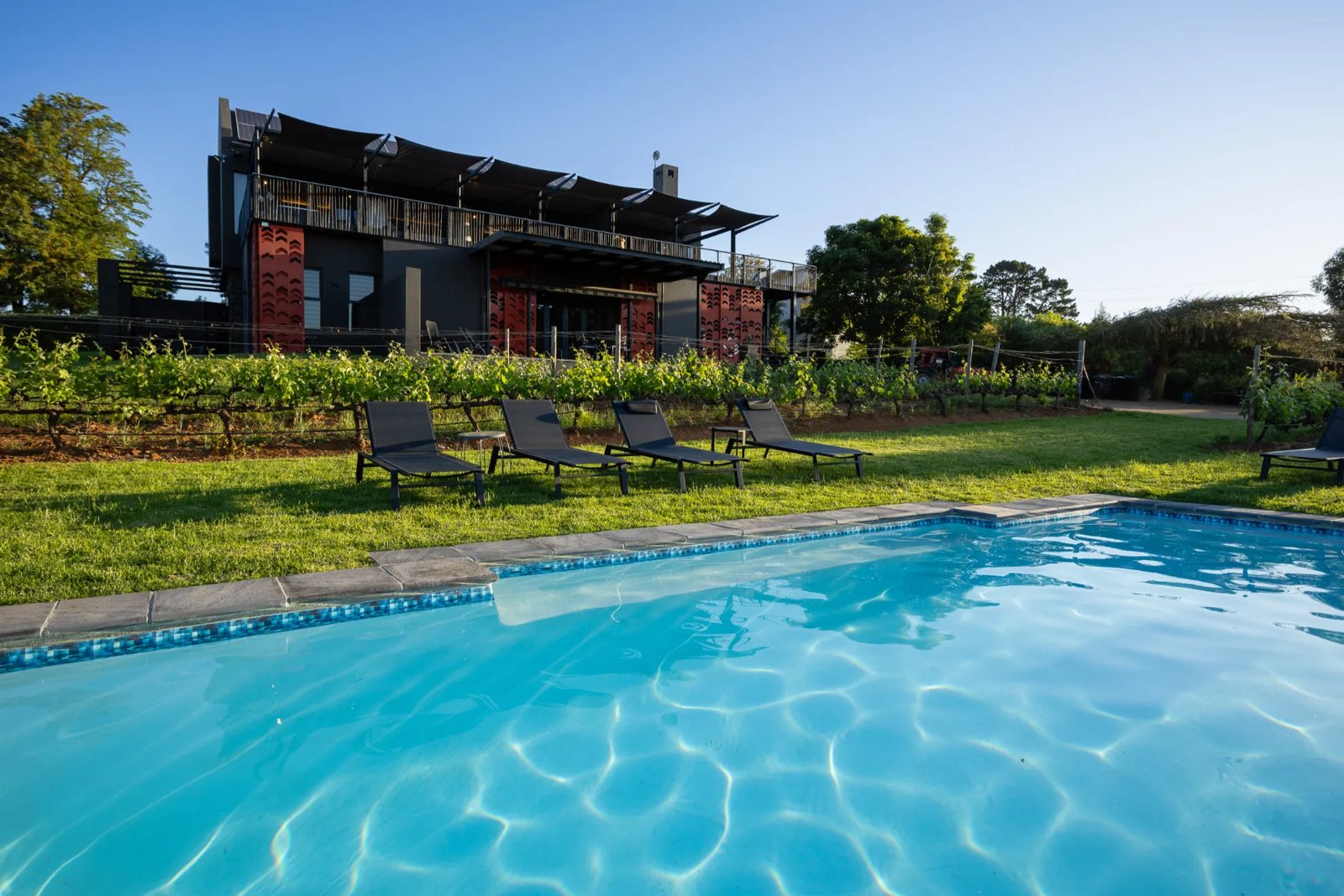
Kunjani Wines (also styled Kunjani Villas & Wines) is a boutique Stellenbosch wine estate in the Bottelary Hills near Devonvale, founded by Paul Barth and Pia Watermeyer.
Romantic Tasting Stay
Stellenbosch
Stellenbosch
Tasting

Stellenbosch
Stellenbosch
KidsRomanticWheelchair access Tasting Restaurant Stay
Stellenbosch
Stellenbosch
Stellenbosch
Stellenbosch
Stellenbosch
Stellenbosch